BLUE-GREEN ALGAE CONFIRMED NEAR SEMINARY

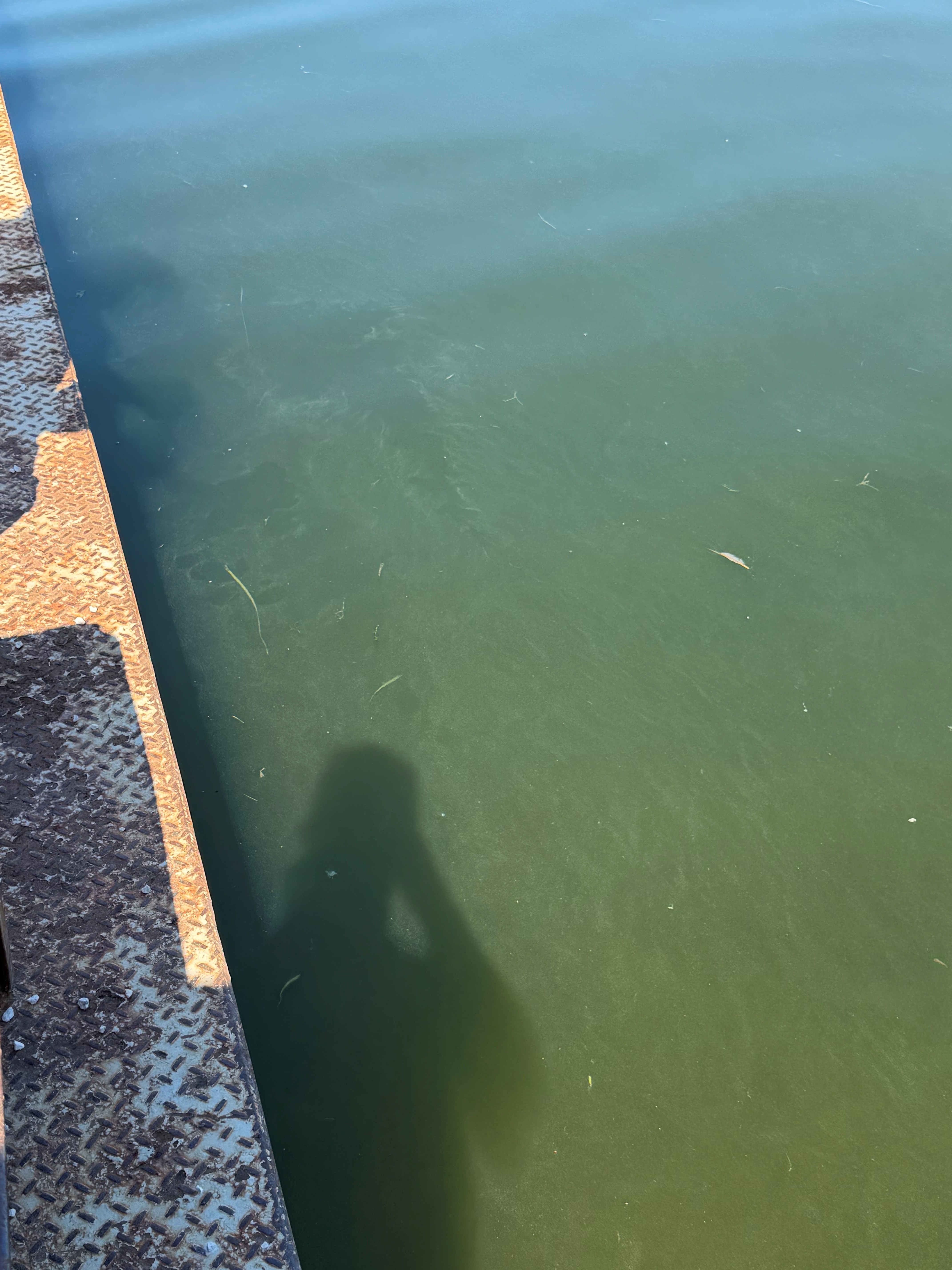
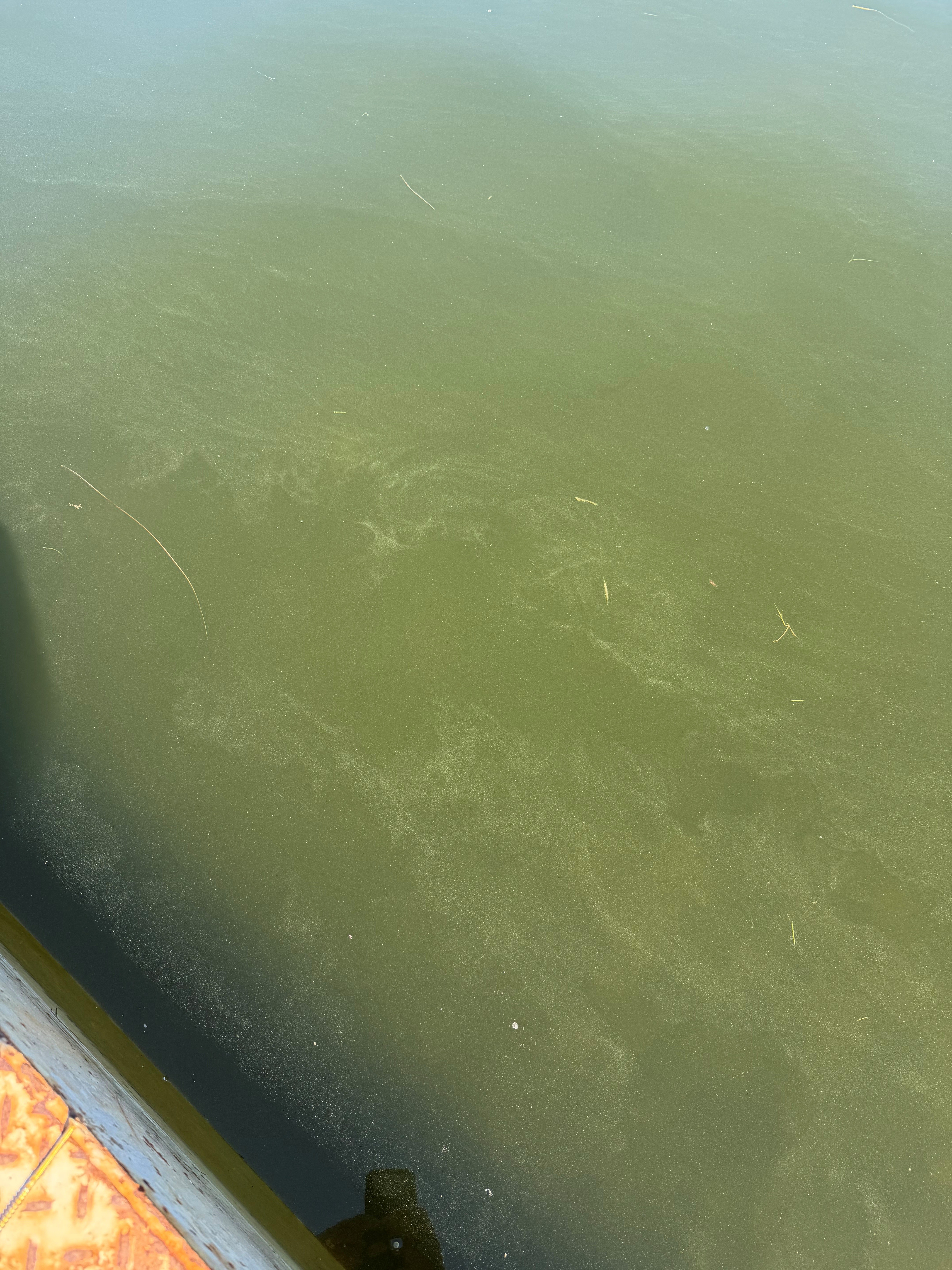
On Friday, 9/11/26, an employee of the Management District observed some suspicious water conditions near the shoreline at the Seminary. Photographs were taken and sent to the Walworth County Department of Health and Human Services (WaCo Dept.HSS) and forwarded to the Wisconsin Department of Natural Resources. (WI DNR) The WI DNR has confirmed from the photos that we were seeing a blue-green algae bloom. We do not know if the blue-green algae bloom is localized to this specific area or if it is more widely dispersed around the lake. See below for things to observed and corresponding safety precautions:
You can’t tell if blue-green algae are making toxins just by looking at them, so treat any visible accumulations like surface scums with caution. Here’s some information about staying safe around blue-green algae blooms:
The Wisconsin Department of Health Services has fact sheets on Staying Safe and Healthy in Wisconsin's Lakes, Blue-green Algae and Dog Safety, and Safe Fishing Practices & Fish Consumption. These fact sheets show you the blue-green algae conditions to watch out for and to avoid. If you have very young children or dogs who will be swimming in the water, it’s safer to keep them out when floating areas of blue-green algae are present, and definitely stay out when conditions resemble those in the fact sheet photos.
Local public health departments have the jurisdiction for beach monitoring in Wisconsin, but most departments do not have the capacity for blue-green algae monitoring. Monitoring can be very challenging as blue-green algae concentrations can change very rapidly, so the best thing you can do is to learn what blue-green algae look like and assess water conditions for yourself before swimming:
- Blue-green algae are in all water bodies in Wisconsin. Waters with high nutrient levels are more susceptible, but even lakes with excellent water quality may experience surface blooms, especially after periods of calm weather when wind can blow blue-green algae into 1 area of a lake.
- Blue-green algae can also grow on lake bottoms and rivers as mats, which sometimes float to the surface.
- It’s always a good idea to avoid swimming in areas with a lot of tiny particles in the water, opaque “pea soup” water, or dark-colored floating mats. All of these may be blue-green algae. Always avoid swallowing untreated surface water because it may contain bacteria, viruses, and parasites that could make you sick.
- If small children and dogs are swimming, choose the clearest water possible for them to swim in.
- Don’t let dogs swim or play in shallow, stagnant areas where blue-green algae mats may be growing on the bottom and dislodged by disturbance.
- Don’t let dogs eat floating material in the water, or material washed up on shore.
- In dogs, water intoxication (from swallowing too much water) and heat stroke share symptoms with blue-green algae poisoning. Give dogs plenty of breaks from playing and retrieving in lakes and give them flat objects for retrieval instead of balls. Always provide shade and fresh, clean water to drink, and wash them off with clean water after they swim, so they don’t lick blue-green algae from their coats.
There’s more information at DNR's Blue-green Algae Page and DHS's Blue-green Algae Page. You can also view a 2021 Wisconsin Water Week DNR presentation on blue-green algae on YouTube.